
What Makes a Good Steam Boiler?
A good steam boiler must meet design, material and control criteria that together deliver efficient, safe, long-lasting and economical operation.
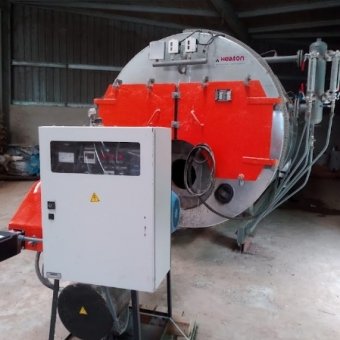
The following criteria should be considered when selecting or evaluating a good steam boiler:
- It should have a three-pass, fully cylindrical design with a water-cooled rear reversal chamber.
- The combustion chamber (furnace) and rear reversal chamber should be of sufficient diameter and length.
- It should deliver the required capacity and pressure.
- It should reach operating conditions in a short time.
- It should run safely and trouble-free.
- Fuel consumption should be economical.
- Flue gas temperature should not be high; it should be efficient.
- Initial installation cost should be economical.
- It should have a long service life.
- Its dimensions should not be excessive.
- It should not place excessive demands on boiler feedwater treatment.
- Repair and maintenance should be easy and low-cost.
- It should not carry water over with the steam.
- Boiler feedwater pH should be 11, with conductivity of 7,000 microsiemens. Conductivity should not exceed 3,000 microsiemens in a steam generator.
- It should respond well to sudden steam demand.
- Gas-side resistance should not be high.
- It should be easy to transport and install.
- It should have adequate automatic controls and safety devices.
- It should work in harmony with its burner.
- It should not operate with excessive noise or vibration.
- It should meet the capacity the business requires.
- Flue gas emissions should be below standard limits and should not pollute the environment.
- Electricity consumption should be low.
- It should allow for fuel changes.
- It should suit the conditions of the country where it will operate.
Frequently Asked Questions
What makes a good steam boiler?
A good steam boiler should achieve efficient combustion through a three-pass, fully cylindrical design; meet the required capacity and pressure; reach operating conditions quickly; run safely and trouble-free; have economical fuel consumption; be long-lasting and easy to maintain; have adequate automatic control and safety equipment; not pollute the environment with its flue gas emissions; and suit the conditions of the country where it operates.